Sign up for the Wellness Newsletter (at the bottom of the page) and get goodies in your inbox!


What is Spoon Theory?
Spoon theory is the idea that spoons are units of energy for a person with a chronic illness or chronic pain. Chronic sufferers are often called "spoonies" or talk about "needing more spoons."
CHRONIC ILLNESSMENTAL HEALTH
Megan Quinn
10/15/20252 min read


In the chronic illness community, you will hear terms like “spoonies,” “spoon theory,” or “needing more spoons”. This is an idea originally brought to light by Christine Miserandino in an essay she wrote about her experience with chronic illness and how it affects her. The “spoons” used in spoon theory each represent a unit of energy: the idea being that with a chronic condition, you have a limited amount of energy for what has to be done every day.
With Chronic Illness, You Have a Limited Number of Spoons
The reason the spoon theory is so effective is because it not only explains why you can’t do everything you want to do since you have limited spoons each day, but also to explain that with a chronic illness, you have a limitation. Where someone without a chronic illness has potentially an unlimited number of spoons.
You might hear other people talking about how they need more spoons or they run out of spoons, and this is exactly what they are talking about. It has become so popular that people with chronic illnesses are often referred to as “spoonies”.
Activities That Use Less or More Spoons
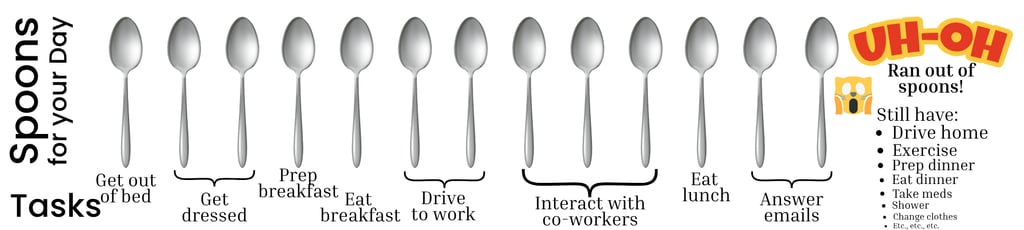
Another thing to keep in mind with the spoon theory is that not every activity uses the same number of spoons. This is a big part of using spoons to describe what you can and can’t do. Maybe something like brushing your teeth uses 1 or 2 spoons, but cooking a meal can use 4, 5, or even more depending how bad your pain (physical or mental) is on that day. Activities that use a lot of energy take more spoons than those who take less, but everything you do from making your bed to driving to work is going to take up some of your spoons.
And sometimes, you run out of spoons before the end of the day. Then you can't finish what you want or need to get done. This can make you feel depressed, that you let yourself or others down. That's why it's so important to make your priorities clear and plan spoons accordingly. And find "cheats" to help get you through the day, like a meal service or pre-made meals from the grocery store instead of cooking, or meal prepping on a weekend day to lower your spoon use for a few days. Try out new things slowly and find what works for you.
Why it is So Helpful
This really helps explain your situation to other people in a way that is a little easier to understand. It can be difficult to tell people that you are too exhausted or in too much pain in order to make plans with them or why you can’t clean your house today. Someone who hasn’t experienced chronic pain won’t really understand everything that is involved in managing the pain, tracking symptoms, taking medications, and just trying to live your life with a level of exhaustion they have never experienced.
The spoon theory helps them see visually that you are limited with how much you can do in one day, and why it is so much different than someone who could probably get more spoons if they had a little rest.
Positively Supportive
Join our community for chronic illness and pain support today.
Wellness Newsletter
© 2025-2026. All rights reserved.